
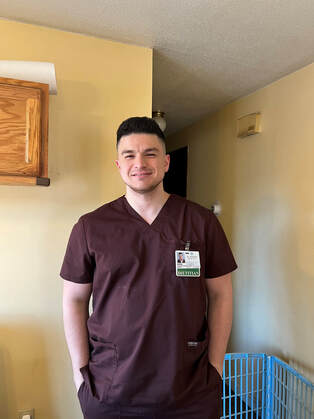
 Hey everyone! My name is Chris Guarino, and I am a region 1 intern out of Nashua, New Hampshire. I completed both my bachelor’s and Master of Science in Nutrition at the University of New Hampshire where I learned advanced skills in Medical Nutrition Therapy and even taught students who are now Registered Dietitians! I also wrote a thesis titled “Associations Between Dietary Patterns and Brain Volume in the Boston Puerto Rican Health Study,” which I was lucky enough to present in-person at the American Heart Association’s Epidemiology conference and the American Society of Nutrition’s conference- both in Boston, MA! Right now, I am in my Advanced Clinical rotation at a Boston hospital, and I am also working on my Community Rotation at the Nashua Soup kitchen. In my spare time, I am busy working as a personal trainer with Orangetheory and a Clerk at Southern New Hampshire Medical Center where I can network with other dietitians.
My favorite clinical experience thus far has been in the ICU! The ICU is constantly changing, and the RDN has an increased role in working with the interdisciplinary team to make sure patients receive adequate nutrition in a short frame of time! I have already seen so many different cases of people who recover from being critically ill and go on to live healthier lives; it just goes to show how important feeding these patients is. While I have a few passions within nutrition, the ICU is by far my favorite place to work, and I decided to do my concentration in the ICU during my time with the Sodexo internship! A few tips I have for future interns:
I have wanted to be an RD since I was 17 and following my interests has only broadened my horizons and opened my confidence in the professional world. In the end, if you love what you do- it isn’t work. 😊 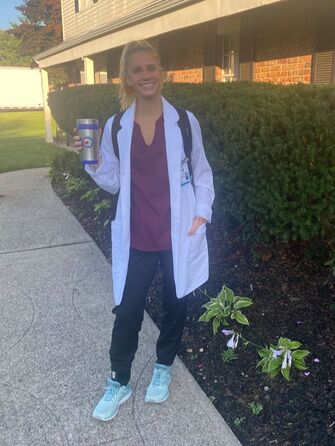 My name is Gianna LaBella, and I’m currently halfway through the Sodexo-URI FEM GP program based in Long Island, NY! I’m halfway through my community rotation where I am at some of the local outpatient sites associated with my clinical facility. My experience so far has been one that I feel incredibly lucky and grateful for. My main clinical facility has provided me with flexibility for changes if needed, multiple opportunities to expand my experience in every unit, and community events to provide education.
One community event I worked at has had a significant impact on me as a future dietitian and how I plan to work in the field. In February, I attended a Health Fair with another intern where we had a table discussing heart-healthy fats, cooking tips, recipes, and seasonings. We had educational material as well for participants on how to read a food label, the amount of added sugar in different beverages, high vs low salt food products, and building a balanced plate. This event was particularly impactful for me because of the connections built with our participants. Specifically, one of the participants spoke with me one-on-one, trying to learn more about healthy eating on the go at work, meal prepping, and how to build nutritious snacks at home. This personal conversation allowed me to build a solid relationship and level of trust with this audience member who was genuinely seeking me out to listen to what we had to say. It was an empowering moment as an RD2BE and left me feeling confident in my future self’s ability to provide nutrition education and counseling when I am in practice. The participant also discussed many cultural barriers they are facing in their life that impact their ability to reach their personal nutrition and health goals. Hearing this audience member honestly express to me the challenges they face daily was a powerful moment for me as a future RD. This conversation allowed me to become more culturally competent in practice and expand my knowledge level on struggles faced within this culture. I left with a better understanding of the challenges one may face within this culture, eliminating any assumed beliefs that may have been present prior. I feel grateful for not only getting to expand what I knew of the lived experiences of this community but also to change the way I will work in this in the future to practice as a more competent professional. Working as a dietetic intern has been filled with endless self-growth and new challenges or obstacles to face, allowing me to step into uncertainty and grow professionally and personally. I am excited and hopeful for what the future may hold for not only my career as a dietitian but for the world of nutrition and dietetics. I hope to work in each field of interest of through my career including the eating disorder patient population and women’s health (i.e., pregnancy, menstruation). 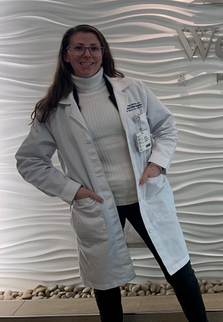 Hello! My name is Megan, I am from southern California, and I am a dietetic intern with Sodexo. So far, I have completed my Foodservice rotation and am now in my advanced clinical rotation. I am lucky that foodservice was my first rotation as it was a good way to ease myself into how a larger hospital works. I’ve worked in eating disorders at residential locations, so I am used to treating patients on a much smaller scale. And I was happy to work on trayline and in the cafeteria because it was something I had never done before.
My first few weeks of clinical were challenging because I had to get to know the computer system for assessing patient. I also had to learn how to look at the bigger picture instead of focusing on one problem. I had to learn to step back and take in all the information so I could treat a patient who has more than one nutritional diagnosis. Now I am in my first week of my advanced clinical rotation and I am dealing with more complicated patients. I am working with ICU patients, and I am learning so much. I especially love attending ICU rounds as there is so much information to soak up. I don’t always understand everything in the moment, but I take notes and look things up later or ask my preceptor when I want to know what something means or when I don’t understand something. It is so interesting to learn about all the different machines that keep people alive. I look forward to learning even more in the coming weeks. I am about halfway through my internship, and I feel I have come so far from where I first started. I feel more comfortable assessing, interviewing, and educating patients now. And I can’t wait to see what my community, specialty and long-term care rotations have in store for me! 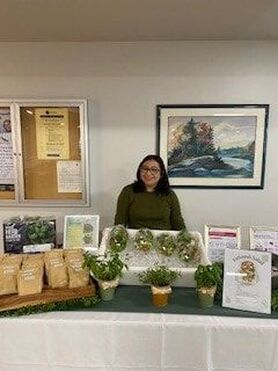 Hello everyone! I’m Laura Banderas-Avalos, current Sodexo dietetic intern from Southern California region 12. I am about to start my intermediate clinical rotation but must say that food service management and patient services have been my favorite rotations so far. Talking to people about nutrition and giving them simple tips and ideas on how to implement small changes that lead to better health makes my heart smile. During my food service management rotation, I did a retail marketing and wellness project centered around Stroke Awareness Day and the “Wonders of Herbs.” The whole premise was lowering your risk for stroke by lowering your blood pressure and stress, two of the leading triggers of stroke. So how did herbs come into play? Well, reducing sodium can reduce blood pressure, and herbs add flavor to foods without the added salt! Not only that, but picking up a new hobby such as gardening (and growing your herbs) can reduce stress— another risk factor in strokes. So not only did my retail marketing and wellness project include a sample of a delicious salad packed with herbs, but I also gave out herb seeds and starter pods to all in attendance and raffled off a 14-herb starter kit as well! It was great to meet staff from other departments; many of them asked if I would be hosting other similar events on a weekly or monthly basis. Some got inspired to put on similar wellness events for their patients. 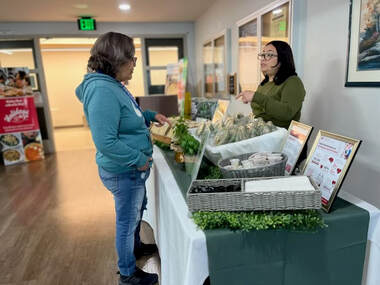 During my Patient Services rotation, I was asked to help with a hospital-wide World Diabetes event, during which over 200 people were expected to attend. Collaborating with other RDNs was such a great experience, and the feedback we received was phenomenal. Staff and patients in attendance loved our Pumpkin Spiced Overnight Oats samples and appreciated the free pumpkin spice and recipe that would allow them to make their own at home. We had so many patients asking questions about portion sizes and how the My Plate method could help them improve their nutrition. People enjoyed visiting our table, and I had such an amazing time being part of such an important event.
These past three months of my internship have given me such an insight into what my future holds. The thought and preparation that goes into planning and executing wellness events can be a lot of work, but being able to use my creativity and event planning skills has been such a wonderful experience. As I move along into my clinical rotations, I am enjoying the interactions I have with patients and the critical thinking that is required when diagnosing their nutritional needs. While starting a new rotation can be a little scary, even nerve-racking, it's becoming easier. With each new rotation comes new challenges and new experiences that continue to increase my confidence and reassure me that I am exactly where I am meant to be. 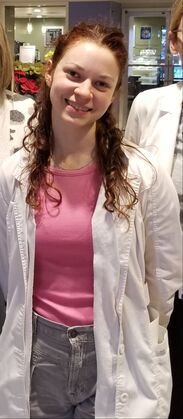 Hi, my name is Molly and I’m a Region 1 intern currently living in Massachusetts! I completed my master’s degree last May, so I’m just doing the standalone internship.
I started off with Foodservice at a local university and it was a very fun and interesting experience. I’ve worked in foodservice for over 10 years, but never at a University, so it was really interesting to see how different organizations operate (i.e., hospitals vs. university vs. restaurant, etc.). After completing my foodservice rotation, I moved on to my clinical rotation. I’m actually in a pretty unique situation because I’m interning at a hospital that I’ve worked at for four years, so I went in already knowing and having good rapport with the dietitians, kitchen staff, diet techs, nursing staff, and hospitalists. This has definitely had its pros and cons, but overall, I’m having such a great time! My preceptors are so amazing and knowledgeable, I love that I am able to laugh and joke around with them, while also being able to learn so much. I have always felt supported by them and they have never made me feel embarrassed or not smart for not knowing something. Every day is a learning experience, it feels like I’m getting my RD, RN, and MD all at the same time! So far, the most exciting part of clinical that I’ve experienced was watching a modified barium swallow. Truthfully, it was probably one of the coolest things I’ve ever seen in my life. The patient was a great example too because they had silent aspiration, so it was really interesting to watch them swallow different textures of liquid and try different methods to help it go down the esophagus. My next mission is to watch a PEG placement, but I’m not sure if I’ll get there! Overall, even though the internship is a lot of work it is very rewarding, and I’ve been learning so much more than I thought I would.  Hey everyone! My name is Morgan Glass and I am a region 8 dietetic intern in Atlanta, Georgia! I am also a student at the University of Rhode Island, where I am completing my master’s degree in dietetics.
My internship kicks off here in the center of Atlanta, at a large sub-acute long-term care facility, where I can complete my food service management and clinical rotations. I am in week seven of my rotations and have completed foodservice management so far. This rotation has shown me what it takes to be a manager. Every day has been different and I had to be able to adapt and roll with the change of the days. While it could be stressful at times, it was really rewarding learning all the aspects that it takes to get patients fed for three meals a day, seven days a week. I was able to participate in several catering events and even plan an event for the patients, staff, and their families. Being able to see the event come to fruition was the icing on the cake. During this rotation, I was able to build rapport with the staff and patients, which I have found to be helpful as I have officially transitioned to my clinical rotation in the same facility. I have just finished my first week in basic clinical and the dietitians I am working with are knowledgeable and supportive. I love the confidence that they each exude and that makes me so excited to continue the next few months with them. The plan for this rotation is to absorb as much information and experience as I can from everyone that I encounter, because though it has only been a week in clinical, I have quickly learned how all departments are connected in the treatment of the patients. While it is early into this process, it feels like the time is flying. As cliché as it sounds, time does fly when you’re having fun. I just take every step of this process with an open mind and even on the hard days remind myself that each day I am one step closer to my ultimate goal. I am so excited to continue the rest of my journey here with Sodexo/URI! 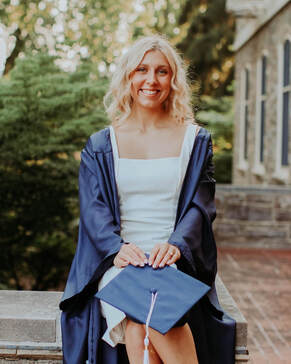 Hi! My name is Maddie Polkinghorn, and I am a Region 4 Sodexo dietetic intern and URI student in Harrisburg, PA. I started my internship in patient services where I gained knowledge in patient satisfaction. In this rotation, I was able to meet with the Director of Patient Satisfaction to gain an overall view of how important this is in a hospital setting. Now I am currently finishing up my clinical rotations. I have 3 days left of staff relief!
I can’t believe I have completed almost 448 hours of clinical experience! During this experience, I have grown in so many ways. At the beginning of my rotation, I was very nervous and struggling with time management and my clinical judgment. I was overwhelmed with the number of patients I needed to see throughout the day. However, now I can see around 10 patients a day with a variety of med-surg and ICU patients. I also feel very comfortable in my knowledge of nutrition support. Throughout my clinical rotation, I was also able to participate in outpatient nutrition education in cardiovascular and pulmonary health. This was a great opportunity to increase my knowledge of these diseases and improve on my motivational interviewing skills. Thanks to my amazing preceptors and intern directors, I feel very confident finishing up my clinical rotation and I am looking forward to my long term care rotation leading into foodservice. I can’t wait until I can finally say I am an RDN! 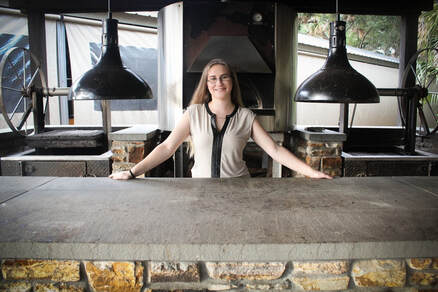 Hello everyone! My name is Katie, and I am a region 10 dietetic student interning in Houston, Texas. I am also enrolled at the University of Rhode Island completing a Master of Science in Dietetics degree.
Currently, I am close to completing my clinical rotation at an acute care hospital where I have learned and grown a tremendous amount! This experience is my first time working in a clinical setting and I have a knowledgeable and patient team of dietitians teaching me valuable information every day. At the beginning of the basic rotation, I was skeptical of talking and giving education to patients. With all my preceptor’s guidance, I am now more confident giving nutritional education to those who need it. There are a variety of people able to help you if you have any questions and need guidance, including preceptors, directors, peers, and mentors! During my advanced clinical rotation, I was able to intern in multiple types of critical care units, the Neuro Intensive Care Unit and Medical Intensive Care Unit, where I was able to participate in rounds! I enjoy talking with members of the healthcare team and learning how we, members of the healthcare team, are providing the best care possible. I was able to determine how I, as the nutrition expert on the case, was able to nutritionally help a patient. Whether recommending supplements, changing a diet order, or counseling the patient, I have been able to provide nutrition support to those that need it. It has been an incredible learning experience! I came from Providence, Rhode Island to Houston, Texas at the end of August 2023 and soon started my clinical rotation. This has been a journey for me as I moved to a new location while starting an internship! I have learned an extreme amount about myself and who I am as a dietitian throughout my time as an intern. I am grateful for this opportunity and the experiences the Sodexo Dietetic Internship has offered! I look forward to the next rotations and cannot wait to see where this program takes me! 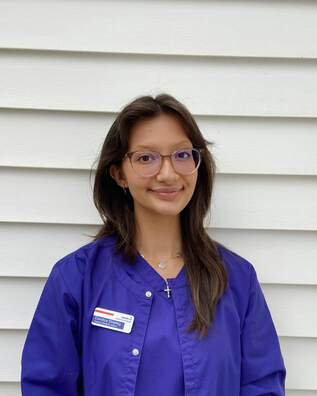 Hi! My name is Candice, I’m from Maryland, and I’m very excited to share a bit about my internship experience with Sodexo/URI. First off, orientation in San Antonio Texas was a phenomenal experience. It presented the perfect opportunity to meet other interns and the wonderful directors who make this program possible.
I’ve already completed my foodservice and patient service rotations. Completing these rotations first created a nice transition into clinical since I became familiar with the kitchen, production flow, menu items, supplements, tray delivery, units, and more before seeing patients. Currently, I am about to start week four of basic clinical. So far, I have learned that while book smarts matter, you truly need repetition and hands-on experience to develop and refine clinical judgement. That’s why I am so thankful for this experience to not only put my knowledge into practice, but also gain wisdom from repetition. Paring this internship along with the nutrition graduate program from URI creates a dynamic and integrated learning adventure. Every day there is always something new to learn and apply into practice. Since patients may only be in the hospital for a couple days, dietitians utilize that short window of time to assess, construct, and execute an appropriate, individualized, and significant nutrition intervention that best benefits the patient. Whether it includes monitoring appetite/intake, educating patients on specific diets, offering supplement coupons (like Ensure), or simply conversing with patients, dietitians improve both a patient’s overall experience and recovery 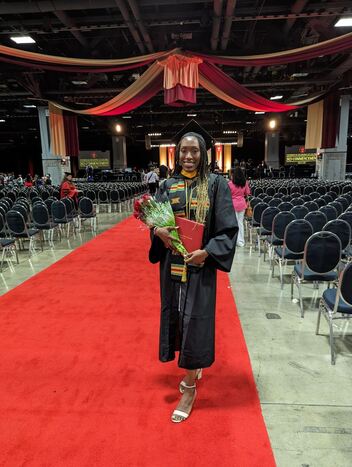 Hey guys! My name is Regina Smalls, a region 5 dietetic intern and URI student in Washington, DC! I have completed my Foodservice rotations and I am now about halfway through my clinical rotations.
My internship experience has challenged me in the best way possible. I am getting a chance to learn a variety of management and leadership styles through working with different preceptors, and they have welcomed me like family. My first rotation was foodservice management, and the first week I was put on the production line. I was so worn out by the end of the week; I slept the entire day the following Saturday! However, I learned so much and got to build relationships with the food service staff, which has helped me as I address patients’ needs going through my clinical rotations. Through my foodservice systems analysis project, I have been able to make recommendations that improved food safety. My implementations are still being used long after my rotation has ended and it really makes me feel like I am making a difference and leaving a mark as I continue my learning experience. My clinical preceptors have been intentional in providing cases that will strengthen my knowledge and skill as I begin my career as a dietitian! My URI experience has been a great supplement to my learning and flows seamlessly into my rotation schedule. Time management is key! And the professors are always willing to help when you need it which is very encouraging and takes some of the pressure off. I am about half way through my dietetic internship and have already learned so much! I am excited for what is in store the next couple of months and am grateful for the opportunity to learn and grow! |